
Your L.A. Roof Is Lying to You — 9 Signs It’s Already Done
Citium Roofing Solutions ·
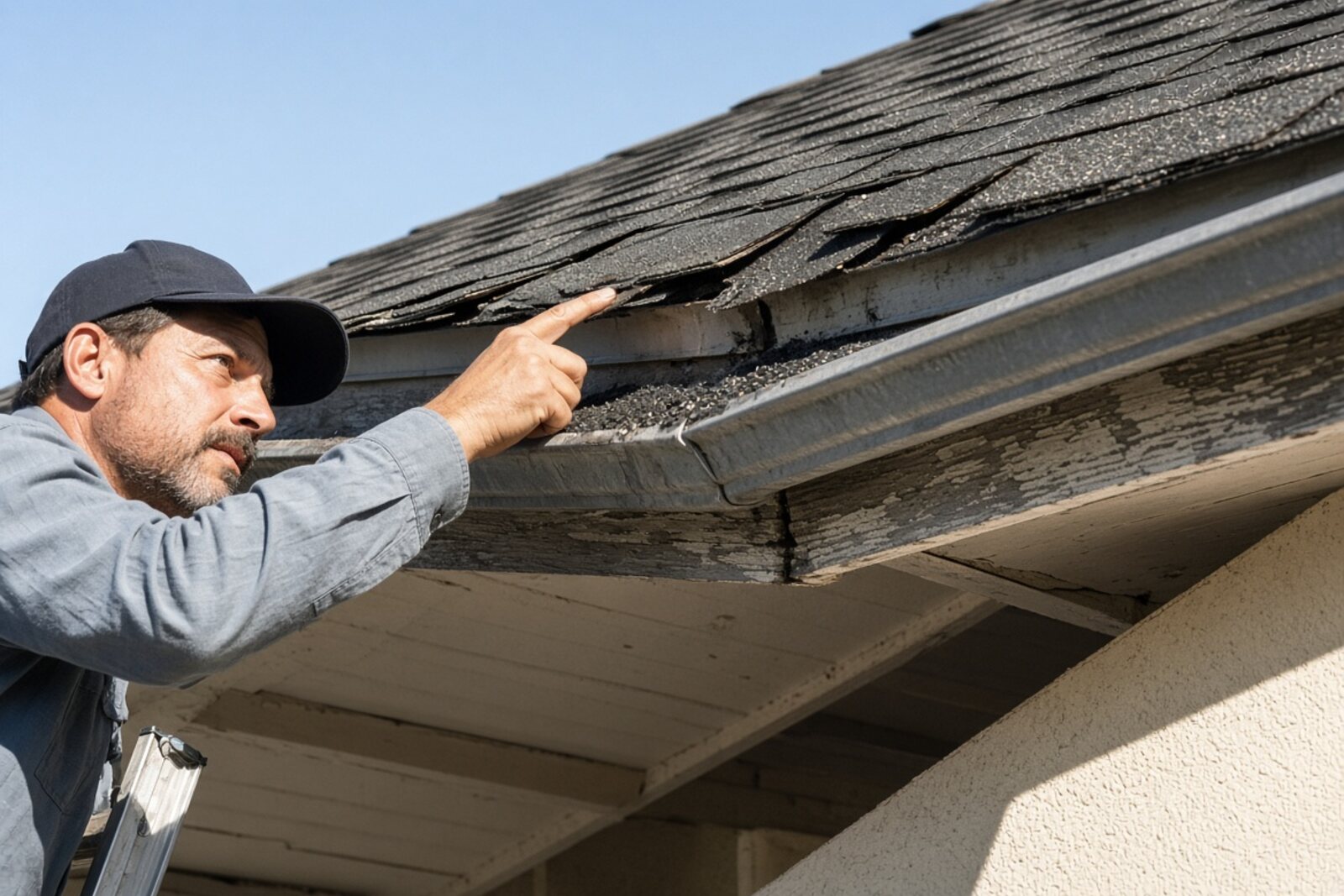
Curling tabs and a gutter full of granules are not “character.” In Valley sun they are a countdown.
Los Angeles roofs fail in slow motion, then all at once. The sun cooks the asphalt for 14 years. The Santa Anas lift a few tabs. You forget about it because it does not rain. Then the first atmospheric river finds every open nail line and you are in the hallway with a bucket.
Here is how Citium Roofing decides repair versus replacement on Valley and city homes.
The 9 signs that argue for a new roof
1. The roof is 20 years old and it is composition shingle
Age is not a disease, but in this climate it is close. A 25-year shingle in Portland is not a 25-year shingle in Mission Hills. UV and thermal cycling dry the mat. If you are at two decades and seeing other symptoms on this list, stop paying for patches.
2. Shingles are curling, cupping, or snapping
Edges up = the asphalt lost its flexibility. Walk the yard after a hot week and look at the south and west slopes first. Those faces die first in the San Fernando Valley.
3. Your gutters look like a beach
Granules protect the shingle from sun. When they pile up at downspouts and you can see raw asphalt faces from the driveway, the covering is spending its last seasons.
4. You have patched more than one leak
One boot, one valley, one skylight — that can be a repair. Three different rooms over two winters means the system is done negotiating.
5. Daylight or damp sheathing in the attic
A pencil beam of light through the deck is a hole. Soft, dark, or fuzzy sheathing is water that already won. At that point you are not buying shingles. You are buying decking.
6. The attic feels like a parked car
Failed ventilation plus a dark, bald roof will punch your summer bill and cook the shingles from below. A reroof is the moment to fix intake and exhaust, not copy the 1987 vent layout.
7. You already have two layers
California does not let you add a third. Overlay on a tired roof also hides rotten decking. Tear-off is the honest job. See 2026 pricing.
8. After the Santa Anas, pieces are gone
Wind does not “randomly destroy” a healthy 8-year architectural roof. It finishes a 22-year roof that had already lost its seal strip. Read the wind checklist.
9. A buyer’s inspector already wrote it up
If you are selling in Los Angeles, an aged roof is a credit or a deal-killer. Replacing before listing is often cleaner than negotiating in escrow with a wet ceiling photo.
When a repair is still the smart play
- Roof under ~15 years with a known product still in warranty
- One penetration, one flashing run, or a handful of tiles
- No widespread granule loss, no soft deck, no second layer
- The leak is new and tied to a specific event (a branch, a kicked boot)
Tile is its own story. The tile you see can look fine while the felt underneath is dust. That is covered in the cracked-tile guide.
A 20-minute homeowner check (no ladder heroics)
- Stand in the street and photograph every slope on your phone. Zoom later.
- Look in the gutters from a stable step stool — grit, tabs, pine needles packed at corners.
- On the next hot afternoon, open the attic hatch. Smell, stains, light, mushy wood.
- After wind, walk the yard for tabs and tiles before the gardener blows them away.
- Note ceiling spots even if they “dried up.” Water has a memory.
Then get a human on the roof. Citium Roofing Solutions will tell you if a repair holds. If it does not, you get a permitted replacement scope — not a scare pitch. Book the inspection.